 |
 |
| |
|
| IFR - Factory
Certified Airframe |
|
|
The IFR-equipped model
exceeds FAR 91.205 requirements and includes features
such as the standard “6 pack” instruments (including TSO gyros),
heated pitot, alternate static, lightning protection (as
required by FAR 23.867, 23.954 etc.), de-icing window, strobes,
navigation, taxi and landing lights, and much more. The
Continental 0-200-A engine used in the aircraft as its FAA
certified under part 33, allowing IFR operations.
The Engine
The
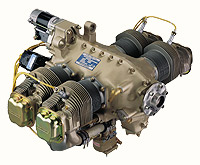
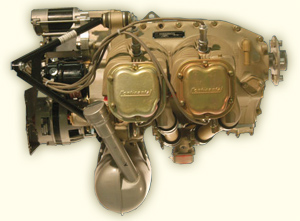
Continental 0-200 engine installed in
the STOL CH 750 S-LSA is
factory new.
 
Why the 0-200 is used in
the 750 S-LSA:
- Built in the USA
- Excellent spare parts
availability
- Excellent customer
service
- Almost every
A&P already knows this engine well
Simple to install; easy to maintain
- Lightweight version
0-200D costs barely more than the Rotax
912 ULS
- FAA certified (Rotax
912 ULS is LSA compliant only -
not FAA certified)
- High resale value.
For IFR flying, the classic 0-200-A
Continental is FAA certified to FAA Part 33.
|

|
ENGINE
CERTIFIED UNDER FAA PART 33, CERTIFIED FOR IFR OPERATIONS
|
|
| The Propeller
A fixed pitch propeller
from Sensenich is installed as standard
equipment. Its light (wood) and protected with
leading edge reinforced fiberglass.
Sensinch propellers are manufactured in
accordance with the FAR's for quality and design.
|

|
| The Airframe
The all metal airframe is tough and
long lasting with minimal maintenance. Keep the
aircraft outside year round is fine so save on
hanger rental costs. The airframe is one of the
few LSA's that has undergone a static load test
on the complete airframe and not just the wings. 6061-T6
aluminum airframe and 4130 steel tubing for the controls.
|
|
Seat
Foam
Temper foam, also known as
memory foam, was first commercialized during the
mid 60’s as a result of NASA’s AMES
Research technology transfer program. This
open-cell variety of flexible polyurethane foam
(FPF) was distinguished by properties
allowing it to redistribute the G-Force suffered
by astronauts during take-off and re-entry, and
providing commercial pilots a more comfortable
seating surface during long flights.
Although Temper foam production technology has
been available for more than 35 years, commercial
products have only recently been made widely
available to consumers.
Temper foam is typified by
its slow recovery after compression. When a
weighted object (for example, the human body) is
positioned on Temper foam, the foam progressively
conforms to the shape of the object, and after
the weight is removed, the foam slowly reassumes
its initial shape. Due to this gradual recovery,
Temper foam also can be described as “slow
recovery” foam.
Other characteristics
include Temper foam’s ability to dampen
vibration as well as absorb shock. This latter
performance characteristic is confirmed in the
laboratory using ball rebound tests. Ball rebound
of less than 20% (compared to 50% – 60% with
other varieties of FPF) supports the description
of Temper polyurethane foam as “dead”
or “low-resilience” foam, in that it
lacks the surface “springiness” of
other FPF products. In fact, certain Temper foam
products claim to absorb up to 90% of impact.
In addition to these key
advantages, Temper foam also react to body
temperature and ambient temperatures, softening
with heat and more easily adjusting to body
contours.
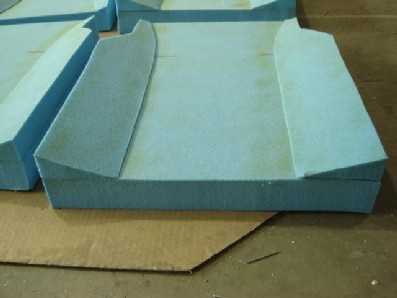
In the Alarus, Temper type
foam is used and is part of the FAA approved Type
Design..
The same foam is
available as an option for the STOL CH 750 S-LSA
|

|
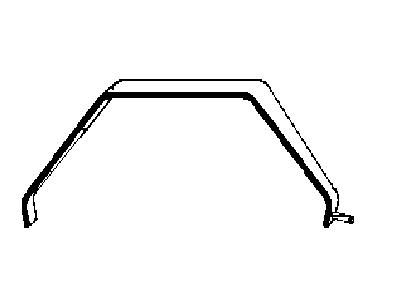
Landing Gear
The
simple one-piece aluminum spring gear of the
FAA certified CH2000 has been well tested in the field as many
flying schools throughout the world are using the
aircraft as a primary and IFR trainer. The toughest gear ever!
The 750 uses the same type gear system.
The
STOL CH 750 S-LSA gear
is similar. Extra tough and simple.
|
|
Avionics
GARMIN
- LIMITED TIME
- G3X Touch system with 10.6”
display, built-in GPS navigation and all
the other great standard features that go
along with it.
- ADS-B Out compliant
transponder paired with the GPS 20A
(compliant ADS-B Out position source).
- Dual frequency ADS-B In
receiver for a complete traffic picture
independent of ADS-B ground stations.
Also gives you subscription
- Garmin Connext capability
with Garmin Pilot flight planning
software, Virb action cameras and more.
- Remote mount GTR 20 10W COM
with built-in stereo intercom,
auto-squelch and 3D audio.
|
|
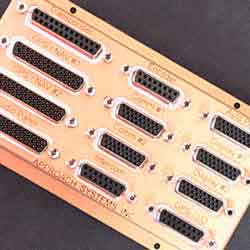
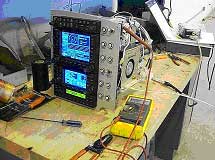
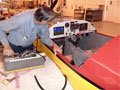
.Transponder-Encoder
and pitot static tests
In order to
meet requirements of FAR 91.411 (...No person may
operate an airplane, or helicopter, in controlled
airspace under IFR unless...Within the preceding
24 calendar months, each static pressure system,
each altimeter instrument, and each automatic
pressure altitude reporting system has been
tested and inspected and found to comply...). Tests are signed off by an FAA
certified person before delivery. Log book entry
must be made.
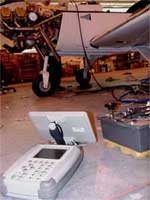
In order to
meet requirements of FAR 91.413 (No persons may
use an ATC transponder.....unless, within the
preceding 24 calendar months, the ATC transponder
has been tested and inspected and found to
comply...). Tests are signed off by an FAA
certified person before delivery. Log book entry
must be made.
|
|
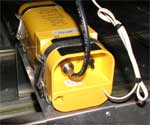
ELT
ELT's are
tested and inspected in compliance with FAR
91.207. ELT can be turned ON at the panel.
|
|
Aircraft Ground
Handling
Nose wheel is
moved through the rudder pedals. Makes it very
easy to taxi and land.
|
|
For more detailed information on the STOL
CH 705, please see www.zenithair.com
For additional information on the LSA, please see
www.eaa.org or http://www.sportpilot.org
|
|